
TOP 10 Best Submersible Pumps 2026
Submersible water pumps are powerful and versatile devices designed to operate while fully submerged in the fluid they are pumping. Unlike traditional pumps that sit above ground and draw water up, a submersible pump pushes water, making it inherently more efficient for deep wells and boreholes. They are quiet, reliable, and crucial for various applications in homes, agriculture, and construction.


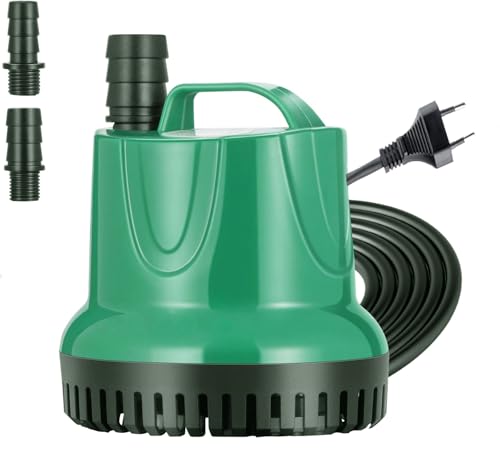


Choosing the right submersible pump requires a clear understanding of its intended use, the characteristics of your water source, and the specific demands of your application. This guide will help you navigate the types, critical specifications, materials, and safety features to select the perfect submersible pump for your needs.
Types of Submersible Pumps and Their Applications
The type of submersible pump you need is dictated by the water source and what you’re pumping.
Borewell / Deep Well Submersible Pumps:
Application: Designed to fit into narrow boreholes (typically 4 inches or 6 inches in diameter) to extract water from significant depths (hundreds of feet). Used for domestic water supply, irrigation in farms, and industrial uses.
Characteristics: Long, slender cylindrical shape. Often multi-stage (multiple impellers) to achieve high head (pressure).
V-Series Designation (V4, V6, V8): This often refers to the outer diameter of the pump in inches, indicating the minimum borewell size it can fit into. V4 (4-inch diameter) is common for domestic use, while V6 (6-inch) and V8 (8-inch) are for higher flow rates and industrial/agricultural applications.
Openwell Submersible Pumps:
Application: Used in open wells, sumps, underground tanks, or reservoirs where the water level fluctuates, but the pump can be completely submerged. Can handle some level of impurities depending on the model.
Characteristics: More compact and wider than borewell pumps. Designed for shallower depths but higher flow rates.
Best for: Domestic water supply from open wells, large sumps, and small-scale agricultural irrigation.
Sump Pumps / Dewatering Submersible Pumps:
Application: Primarily used to remove unwanted water from basements, crawl spaces, sumps (pits that collect water), construction sites, or flooded areas.
Characteristics: Often designed to handle clean to slightly dirty water with small solids. Can be portable for emergency use.
Best for: Flood prevention, draining pools/ponds, general water transfer.
Sewage / Drainage Submersible Pumps:
Application: Specifically designed to handle wastewater containing solid waste, fibrous materials, and debris. Used in residential, commercial, and industrial wastewater management.
Characteristics: Feature specialized non-clog impellers (e.g., vortex impeller) or cutter mechanisms to break down solids. Made from robust, corrosion-resistant materials.
Best for: Pumping sewage, greywater, or very dirty water with suspended solids.
Utility / Fountain / Pond Pumps:
Application: Small pumps for water features, aquariums, small ponds, or simple water transfer.
Characteristics: Low power, compact, focus on circulation or creating small flows.
Key Specifications: Matching Pump to Application
Accurate sizing is crucial for efficiency and longevity. You need to calculate Head and Flow Rate.
Flow Rate (Discharge Rate – LPM / LPH / m³/hr):
- Definition: The volume of water the pump can deliver per unit of time.
- Calculation: Determine your daily or hourly water demand.
- For Home: Consider number of bathrooms, kitchen outlets, garden needs (e.g., 200-300 LPH per bathroom, plus kitchen/garden).
- For Agriculture: Calculate crop water needs per hour/day, type of irrigation system (drip, sprinkler), and field size.
General Guide:
- Domestic: 500 – 3000 Liters per Hour (LPH) or 0.5 – 5 Liters per Second (LPS).
- Agricultural/Commercial: Thousands of LPH to dozens of LPS.
- Head (Delivery Head / Total Dynamic Head – Meters / Feet):
- Definition: The total vertical distance the pump needs to lift the water, plus the pressure required to overcome friction losses in pipes, valves, and accessories, and to deliver water at the desired pressure at the outlet.
Calculation:
- Vertical Lift (Static Head): Depth of water source + height to delivery point (e.g., top of overhead tank).
- Friction Loss: Energy lost due to water rubbing against pipes, elbows, valves. This depends on pipe length, diameter, number of bends. (Rough rule: 10m horizontal distance = 1m head loss).
- Desired Pressure (Residual Head): The pressure needed at the outlet (e.g., 20-30 meters for good shower pressure).
- Total Head (HT) = Static Head + Friction Loss + Residual Head.
- High Head Pumps: Specifically designed to pump water to great heights or over long distances, often with more impeller stages.
Horsepower (HP) / Kilowatts (kW):
- Definition: The power of the pump’s motor.
- Selection: Once you have your required Flow Rate and Total Head, consult the pump’s performance curve (provided by manufacturers). This graph shows the pump’s efficiency at different combinations of head and flow. Choose a pump where your calculated head and flow fall within the pump’s Best Efficiency Point (BEP).
General HP Range:
- Domestic: 0.5 HP to 3 HP.
- Agricultural/Industrial: 3 HP to 15 HP (or even hundreds of HP).
- Well Diameter: For borewell pumps, the pump’s outer diameter (e.g., V4, V6) must fit the borewell casing.
Materials: Durability and Corrosion Resistance
The construction materials are crucial for the pump’s lifespan, especially since it operates submerged.
Stainless Steel (SS 304 / SS 316):
Pros: Most popular choice for general water supply (potable water, well pumps). Highly resistant to corrosion from water. Durable and long-lasting. SS 316 offers even better corrosion resistance for slightly more aggressive water.
Cons: Can be more expensive than cast iron or thermoplastic.
Cast Iron:
Pros: Known for strength, durability, and resistance to abrasion. Often used for sewage and wastewater applications due to its robustness. More economical.
Cons: Prone to corrosion (rust) if not coated or if water quality is aggressive.
Thermoplastic / Plastic (e.g., Noryl, PVC):
Pros: Lightweight, highly resistant to corrosion from chemicals or aggressive water. Used for impellers, diffusers, or entire pump bodies in utility/drainage pumps. Affordable.
Cons: Less durable for high-pressure or abrasive applications compared to metal. Can be affected by very high temperatures.
Bronze: Used in specific applications, particularly for saltwater or brackish water due to its excellent corrosion resistance in marine environments.
Impeller Material: Often made from stainless steel, Noryl, or bronze for wear resistance. For dirty water/sewage, look for cast iron or specialized cutter impellers.
Motor Casing: Often stainless steel for corrosion protection.
Motor Cooling Method: Oil-Filled vs. Water-Cooled
How the motor dissipates heat affects efficiency, durability, and safety.
Oil-Filled Submersible Pumps:
- How it works: The motor housing is filled with a dielectric cooling oil.
- Pros: Excellent lubrication and cooling properties, leading to longer service life and smoother operation. More energy-efficient. Less prone to rusting if not used for long periods. Preferred for colder climates as oil doesn’t easily freeze.
- Cons: More expensive. A faulty seal can lead to oil leakage and potential water contamination (though rare with quality pumps).
Water-Filled Submersible Pumps:
- How it works: The motor housing is filled with clean water.
- Pros: Safer for potable water applications (no oil contamination risk). Less expensive. Perform well in dry and tropical climates.
- Cons: Can be more prone to rusting if not used for extended periods. Less self-lubricating, potentially leading to a shorter service life than oil-filled. Less energy efficient.
- Recommendation: For heavy-duty use, longevity, and efficiency, oil-filled pumps are often preferred. For pure potable water applications and budget, water-filled is suitable.
Safety Features and Protection Mechanisms
Crucial for protecting the pump and ensuring reliable operation.
Thermal Overload Protection: Essential. Automatically shuts off the pump if the motor overheats due to excessive current draw or prolonged running, preventing winding damage. Can be thermal element or electronic.
Dry Run Protection (Low Water Level Cut-off): Crucial. Prevents the pump from running without water. Running dry can cause severe overheating and damage to the motor and seals. This often requires an external controller or a float switch for sump/openwell pumps.
Low/High Voltage Protection: Protects the motor from damage due to voltage fluctuations outside its operating range.
Single Phasing Prevention: (For three-phase pumps) Protects the motor if one of the three phases loses power.
Reverse Phasing Protection: (For three-phase pumps) Ensures the pump motor rotates in the correct direction.
Overcurrent/Undercurrent Protection: Detects abnormal current draw, indicating blockages or dry run conditions.
Panel/Controller: Submersible pumps often require an external control panel (starter box) that integrates these safety features, capacitors (for single-phase), and ON/OFF switches. Look for robust, weatherproof control panels.
Power Requirements: Single-Phase vs. Three-Phase
Your available electrical supply dictates this.
Single-Phase (220V/230V):
- Pros: Common in most homes and small farms. Easier to install. Lower initial cost for the pump and wiring.
- Cons: Less efficient for higher HP motors. Limited power output (typically up to 3 HP).
- Best for: Domestic water supply from shallow wells, small gardens, or small farms.
Three-Phase (380V/415V/440V):
- Pros: Highly efficient, designed for heavy loads and continuous operation. Longer lifespan due to fewer moving parts (no starting capacitor).
- Cons: Requires a three-phase power supply (not available everywhere). More complex wiring and higher installation costs.
- Best for: Deep borewells, large irrigation systems, industrial applications, or very large farms.
Energy Efficiency and Smart Features
High-Efficiency Motors: Look for pumps with high efficiency ratings (often up to 90% or higher for large, well-maintained pumps), which directly reduce electricity bills.
Variable Frequency Drives (VFDs): (For larger/smart pumps) Adjust pump speed according to actual water demand, significantly reducing electricity consumption and optimizing performance.
Solar-Powered Submersible Pumps: Becoming mainstream in 2025. Offers efficient water delivery in off-grid and remote areas. Hybrid systems (combining solar and grid/diesel) ensure resilience.
Smart Monitoring & Automation (IoT-enabled): (For advanced agricultural/domestic systems) IoT sensors provide real-time data on water flow, pressure, and even water levels. Automated control systems allow remote monitoring, scheduling, and adjustments via mobile apps or cloud dashboards. Can integrate with AI-powered irrigation assistants.
Brands in India
- Kirloskar: A market leader, highly reputable for a wide range of submersible pumps for domestic, agricultural, and industrial needs.
- Crompton: Known for energy-efficient and reliable submersible pumps with good safety features.
- Havells: Offers a good range of submersible pumps for various applications.
- V-Guard: Popular for robust construction and energy efficiency.
- Texmo: Pioneer in submersible pumps in India, offering a wide array of models.
- Jain Submersible Pumps: Known for sustainable pumping technologies, including solar-powered solutions.
- Franklin Electric: (International brand with strong presence) Known for high-quality submersible pump systems.
- Oswsal / MBH: Other reputable brands offering reliable solutions.
Conclusion
A submersible water pump is a critical component for accessing water from borewells, open wells, or for managing drainage. By accurately determining your required Flow Rate and Total Head, choosing the correct HP/kW, and ensuring the pump’s material (e.g., stainless steel) and motor type (oil-filled for durability, water-filled for purity) suit your water quality and usage, you can make a sound investment. Prioritize robust safety features like dry run and thermal overload protection, select the appropriate power supply (single-phase vs. three-phase), and consider smart features for enhanced efficiency and control. The right submersible pump will provide reliable and efficient water access for years to come.