
TOP 10 Best Stabilisers For AC 2026
n regions plagued by inconsistent power supply and frequent voltage fluctuations, an AC stabilizer is not just an accessory but a vital necessity. Air conditioners, particularly their sensitive compressors and intricate circuitry, are highly vulnerable to voltage spikes, drops, and prolonged periods of unstable electricity. A voltage stabilizer acts as a protective shield, regulating the incoming power to ensure your AC receives a consistent and safe voltage, thereby safeguarding it from damage, prolonging its lifespan, and helping it operate efficiently.


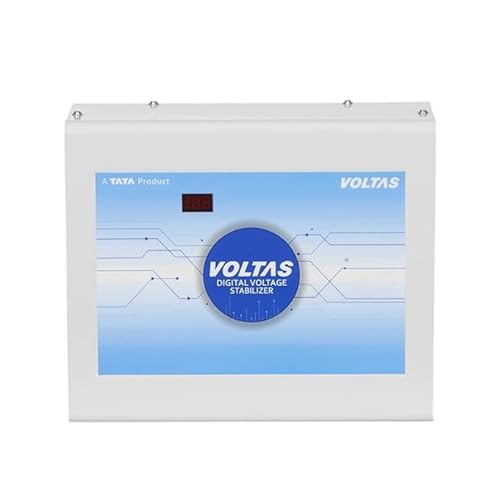




While many modern inverter ACs come with a built-in “stabilizer-free operation” range, this protection might not be sufficient for areas with extreme or persistent voltage fluctuations (e.g., below 160V or above 270V). This buying guide will help you understand the types of AC stabilizers, how to size them correctly, and what critical features to look for.
Why You Need an AC Stabilizer (Even for Inverter ACs)
Voltage fluctuations are common due to grid instability, sudden load changes, faulty wiring, and natural causes (like lightning).
Protection for Compressor – The compressor is the heart of your AC and is highly susceptible to damage from erratic voltage. A stabilizer ensures it receives a steady supply.
Preventing Circuit Board Damage – Sensitive electronic components and PCBs (Printed Circuit Boards) in modern ACs can be fried by sudden voltage surges or dips.
Extending AC Lifespan – Consistent voltage reduces wear and tear, preventing premature failure and costly repairs.
Ensuring Efficient Cooling – When voltage is too low, the AC might struggle to cool effectively. A stabilizer ensures optimal operation.
Addressing Local Grid Issues – Even if your AC has an in-built voltage range, it might not handle the extreme fluctuations common in certain areas. An external stabilizer provides an extra layer of robust protection.
Stabilizer Type: How They Regulate Voltage
Different types of stabilizers offer varying levels of accuracy, speed, and cost.
Relay Type Stabilizers (Digital Stabilizers):
How they work: Use a series of relays to switch between different transformer tappings, correcting voltage in steps.
Pros: Most affordable, widely available, easy to install. Come with digital displays to show input/output voltage.
Cons: Slower response time (voltage correction is not instantaneous). Lower accuracy (output voltage may vary by ±5-10%). Relays can wear out over time, making them less durable for very frequent fluctuations.
Best for: Areas with minor to moderate voltage fluctuations.
Servo-Controlled Stabilizers:
How they work: Use a servo motor and a buck/boost transformer to continuously and smoothly adjust the output voltage. They have moving parts.
Pros: High accuracy (±1% output voltage variation), ensuring very precise voltage for sensitive equipment. Capable of handling large and frequent voltage fluctuations and heavy loads.
Cons: Higher initial cost. Requires periodic maintenance due to moving parts.
Best for: Industrial applications, very high-end ACs, or areas with extremely wide and frequent voltage fluctuations where precision is paramount.
Static Voltage Stabilizers (or Solid-State Stabilizers):
How they work: Use solid-state electronics (SCRs, IGBTs) controlled by a microprocessor. No moving parts.
Pros: Fastest response time to voltage changes, offering near-instantaneous corrections. Highly efficient. Low maintenance due to no moving parts. Very reliable.
Cons: Higher initial cost than relay types. May not handle extreme voltage variations as effectively as servo in some very specific scenarios, but generally superior to relay types for precision and speed.
Best for: High-end appliances, sensitive electronics, and users seeking a balance of efficiency, speed, and low maintenance. Becoming more common for ACs.
Capacity (VA / KVA) Calculation: Get the Right Size
An incorrectly sized stabilizer won’t protect your AC effectively.
General Rule: A stabilizer’s VA/kVA rating should be at least 2 to 2.5 times the tonnage of your AC, or 1.2 to 1.5 times the maximum power consumption (in Watts) of your AC.
Approximate Guide for AC Stabilizers:
- 1 Ton AC: Requires a stabilizer of 2 KVA to 3 KVA (2000 VA to 3000 VA). (AC typically consumes 1000-1200W)
- 1.5 Ton AC: Requires a stabilizer of 3 KVA to 4 KVA (3000 VA to 4000 VA). (AC typically consumes 1500-1900W)
- 2 Ton AC: Requires a stabilizer of 4 KVA to 5 KVA (4000 VA to 5000 VA). (AC typically consumes 2000-2500W)
How to Calculate Exactly:
Find AC’s Max Power Consumption – Look for the “Maximum Power Consumption” or “Input Power” in Watts (W) on your AC’s rating sticker or user manual.
Add Safety Margin – Multiply this wattage by 1.25 (for a 25% safety margin to account for power factor and startup current).
Convert to VA – Divide the result by the stabilizer’s assumed power factor (usually 0.8 for resistive loads, but can vary). Example: For a 1.5 Ton AC with 1900W max consumption: (1900W * 1.25) / 0.8 = 2375 / 0.8 = 2968.75 VA. So, a 3 KVA (3000 VA) stabilizer is ideal.
Recommendation: Always choose a stabilizer with a slightly higher VA rating than your calculated need.
Voltage Working Range: Match Your Locality
Input Voltage Range – This is the range of fluctuating input voltage the stabilizer can handle.
Wide Range (e.g., 90V-300V or 130V-300V) – Essential for areas with severe and frequent low or high voltage fluctuations.
Narrower Range (e.g., 170V-270V) – Sufficient for areas with mild voltage fluctuations.
Output Voltage – Most stabilizers regulate output to a safe range for appliances, typically 200V-240V or a tighter range like 220V±3%.
Recommendation: Know the typical voltage fluctuations in your area (ask neighbors, check with an electrician) and choose a stabilizer with an input range that comfortably covers them.
Safety Features: Protecting Your AC and Home
Safety features are non-negotiable for protecting expensive appliances.
Low and High Voltage Cut-off – Essential. Automatically disconnects the power supply to the AC if the input voltage drops below or spikes above the stabilizer’s safe operating range, preventing damage to the AC.
Intelligent Time Delay System (ITDS) – Crucial for ACs. Prevents immediate restart of the AC’s compressor after a power cut (even a brief one). It provides a delay (e.g., 3-5 minutes) to allow the compressor to rebalance its pressure, preventing damage from rapid on/off cycles.
Thermal Overload Protection – Shuts off the stabilizer if it overheats due to excessive load or internal malfunction, preventing fire hazards.
Short Circuit Protection – Protects the stabilizer and connected appliance from damage due to short circuits.
Surge Protection – Shields the AC from sudden, massive voltage spikes (e.g., from lightning strikes or power grid errors).
Wall Mountable Design – Many AC stabilizers are designed to be wall-mounted next to the AC’s outdoor unit or indoor unit, saving space and providing a neat installation.
Fire Retardant Body – Made from materials that are designed to resist fire.
Advanced Features and Connectivity
- Digital Display – Provides real-time readouts of input voltage, output voltage, load status, and protection modes. More informative than basic LED indicators.
- Microcontroller-Based Operation – Ensures faster and more precise voltage correction compared to older circuit designs.
- Smart Output Voltage Correction – Some advanced models can dynamically adjust the regulation range to provide the most stable output regardless of input variations.
- Wi-Fi Connectivity / App Control – (Emerging) Allows remote monitoring of voltage levels, power consumption, and status alerts via a smartphone app.
- Energy-Efficient Design – Look for stabilizers that claim high efficiency, consuming minimal power for their own operation.
- Universal Compatibility – Ensure the stabilizer is compatible with all types of ACs (inverter ACs, split ACs, window ACs) and major brands.
Coil Material: Copper vs. Aluminum
Copper Wound Transformers:
- Pros: Better heat dissipation, higher efficiency, more durable, and generally longer lifespan. Preferred for reliability.
- Cons: More expensive and heavier.
Aluminum Wound Transformers:
- Pros: More affordable, lighter.
- Cons: Less efficient, less durable, and can be prone to overheating.
Recommendation: Copper wound stabilizers are generally recommended for their superior performance and longevity, especially for an expensive appliance like an AC.
Brands in India
- V-Guard: A market leader, known for a wide range of reliable AC stabilizers with advanced features like ITDS and digital displays.
- Microtek: Popular for its digital voltage stabilizers across various capacities.
- Aulten: Known for competitively priced digital stabilizers with good protection features.
- Everest: Offers a range of stabilizers, often highlighted for their time-delay and protection features.
- Candes: Provides budget-friendly options with essential features.
- Voltas: Offers stabilizers often specifically designed to complement their AC units.
- Servevolt / Servomax: Known for robust servo stabilizers.
Conclusion
An AC stabilizer is an indispensable guardian for your air conditioner, particularly in areas with fluctuating power supplies. By carefully calculating the correct VA/kVA capacity for your AC, choosing a stabilizer with a wide input voltage range suitable for your locality, and prioritizing essential safety features like low/high voltage cut-off and Intelligent Time Delay System, you can protect your valuable appliance. Investing in an inverter-compatible, copper-wound, and digitally controlled stabilizer from a reputable brand will ensure stable power delivery, enhance your AC’s lifespan, and provide peace of mind through every power fluctuation.