
TOP 10 Best Gaming Laptops Under 100000 2026
For aspiring gamers, content creators, and power users in India, the sub-₹1,00,000 (1 Lakh) price bracket for gaming laptops offers an exciting array of powerful machines. This segment has become incredibly competitive, bringing advanced processors, dedicated graphics cards, and high refresh rate displays that were once exclusive to much more expensive models.

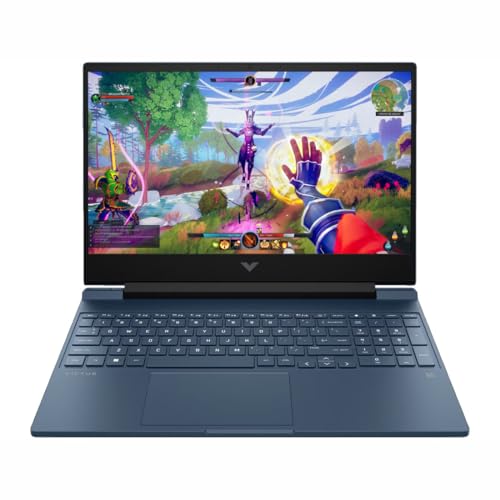


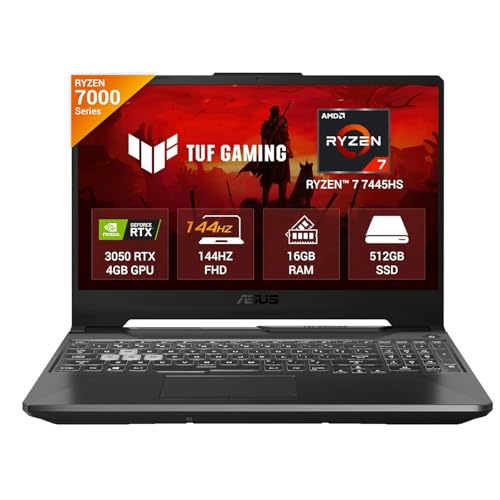
While you won’t get every cutting-edge feature found in flagship devices, a well-chosen gaming laptop under ₹1 Lakh can deliver a fantastic gaming experience and handle demanding tasks with ease.
This guide will break down the essential components and features to prioritize, helping you navigate the options and find the perfect gaming powerhouse within your budget.
Every component plays a role in a gaming laptop’s performance. Understanding their significance will help you make an informed decision.
Processor (CPU): The Gaming Brain
The CPU is vital for overall system responsiveness, game physics, AI, and handling background tasks.
Sweet Spot: Look for Intel Core i5 (12th, 13th, or 14th Gen H/HX series) or AMD Ryzen 5 (7000 or 8000 series HS/HX). These offer excellent multi-core performance for gaming and multitasking.
Higher Tier: Some models might push to an Intel Core i7 (12th or 13th Gen H/HX series) or AMD Ryzen 7 (7000 or 8000 series HS/HX), providing even more headroom for demanding games or content creation.
Why Newer Generations Matter: Newer generations bring architectural improvements, better power efficiency, and sometimes more cores/threads, directly translating to smoother gameplay and faster task completion.
Graphics Card (GPU): The Gaming Powerhouse
This is arguably the most crucial component for gaming performance, dictating frame rates and graphical fidelity.
Ideal GPUs: In the sub-₹1 Lakh segment in mid-2025, you should aim for:
NVIDIA GeForce RTX 4060 (8GB GDDR6 VRAM): This is the top-tier GPU you can find in this budget. It offers excellent 1080p gaming performance, supports DLSS 3/3.5, and has enough VRAM for modern titles.
NVIDIA GeForce RTX 4050 (6GB GDDR6 VRAM): A very strong contender, offering great 1080p performance and supporting ray tracing (though less effectively than the 4060) and DLSS 3.
NVIDIA GeForce RTX 3050 (4GB or 6GB GDDR6 VRAM): While older, the 6GB variant is still capable for 1080p gaming at medium to high settings, especially with DLSS enabled. Avoid the 4GB variant if possible, as it can be VRAM-limited in newer games.
AMD Radeon RX 7600S / RX 6500M: Less common but can offer competitive performance.
TGP (Total Graphics Power): This is critical! A higher TGP means the GPU can draw more power, leading to better performance. For an RTX 4050 or RTX 4060, look for TGP values of 85W, 95W, 100W, or even 115W-140W (especially on RTX 4060s). A low TGP (e.g., 60W-75W) can significantly bottleneck even a powerful GPU.
MUX Switch: A MUX (Multiplexer) switch allows the dedicated GPU to directly send frames to the display, bypassing the integrated GPU. This can result in a 5-15% performance boost in games. While not universal, it’s a highly desirable feature to look for.
RAM and Storage: Speed and Capacity
These impact loading times and multitasking efficiency.
RAM: 16GB DDR4 or DDR5 RAM is the standard and recommended minimum. DDR5 is faster and more future-proof. Ensure it’s running in dual-channel mode (e.g., 2x8GB sticks). Check if there’s an additional RAM slot for future upgrades to 32GB.
Storage: A 512GB NVMe PCIe Gen3 or Gen4 SSD is the absolute minimum. Gen4 SSDs are faster than Gen3. For gamers, a 1TB NVMe SSD is highly preferable due to large game sizes. Look for laptops that offer a second M.2 slot for future storage expansion.
Display: Immerse Yourself in the Game
A high-quality display makes a massive difference to your gaming experience.
Resolution: Full HD (1920×1080) is the sweet spot for gaming performance at this price.
Refresh Rate: A 120Hz or 144Hz refresh rate is essential for smooth gameplay in fast-paced titles. 165Hz is even better if available.
Panel Type: IPS (In-Plane Switching) panels offer excellent color accuracy and wide viewing angles. Avoid TN panels if possible.
Brightness: Look for a minimum of 250-300 nits of brightness for comfortable viewing.
Aspect Ratio: Most will be 16:9, but some newer models are starting to offer 16:10 aspect ratios (e.g., 1920×1200), which provide more vertical screen real estate for productivity.
Cooling System: Sustained Performance
Effective cooling is crucial for maintaining performance during long gaming sessions and extending the laptop’s lifespan.
Design: Look for laptops with robust cooling solutions. Brands often highlight features like dual fans, multiple heat pipes, large vents, and advanced thermal designs (e.g., “Hyperchamber,” “Cooler Boost 5”).
Vents: Ensure there are sufficient exhaust vents (typically at the back and sides) and intake vents (on the bottom).
Software Control: Many gaming laptops come with software (e.g., ASUS Armoury Crate, Lenovo Vantage, HP Omen Gaming Hub) that allows you to monitor temperatures and adjust fan speeds or performance profiles.
Build Quality and Design
While plastics are common, look for good construction.
Chassis: A sturdy chassis with minimal flex is desirable.
Keyboard: A comfortable, backlit keyboard (preferably RGB) with decent key travel is essential for gaming and typing.
Portability: Gaming laptops are generally heavier. Expect weights ranging from 2.2 kg to 2.5 kg+. If you need to carry it daily, check the weight.
Brands and After-Sales Service in India
Reputation and support are important for any electronic purchase. Popular brands known for gaming laptops in this segment in India include:
ASUS (TUF Gaming series): Known for robust build quality, good cooling, and often competitive pricing with excellent after-sales support.
Lenovo (LOQ series): Offers strong performance, good cooling, and clean designs, with reliable service.
HP (Victus, Omen series): Provides a balance of performance and aesthetics, with good service networks.
Acer (Nitro series): Often offers aggressive pricing with strong specs, a popular choice for budget-conscious gamers.
MSI (Katana, GF Thin series): Known for their gaming heritage, offering various configurations.
Conclusion
The gaming laptop market under ₹1 Lakh in India offers incredible value in mid-2025. By prioritizing a powerful CPU (Intel Core i5/i7 12th/13th/14th Gen or AMD Ryzen 5/7 7000/8000 series), a capable GPU (aim for RTX 4050/4060 with good TGP), ample RAM (16GB DDR4/DDR5), fast storage (512GB/1TB NVMe SSD), and a high-refresh-rate IPS display, you can secure a machine that delivers an excellent gaming experience for years to come. Remember to balance these core components with good cooling and a sturdy build from a reputable brand to maximize your investment.