
TOP 10 Best Asus Laptops 2026
ASUS has long been a major player in the global laptop market, celebrated for its wide array of innovative and performance-driven machines. From cutting-edge gaming beasts and sleek, professional ultrabooks to versatile everyday companions, ASUS offers a laptop for virtually every type of user and budget.


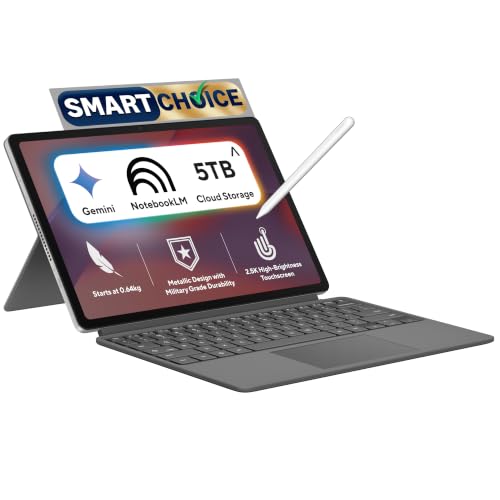


Choosing an ASUS laptop means delving into a diverse portfolio that blends performance, design, and often competitive pricing. This guide will demystify ASUS’s key laptop series, highlight their unique features, and help you navigate the options to find your perfect match.
ASUS categorizes its extensive laptop lineup into distinct series, each tailored for specific user needs and priorities.
ASUS Laptop Series
Understanding each series is crucial for narrowing down your options
ZenBook (Premium / Ultraportable / Creator-Lite)
Target Audience: Professionals, content creators, and users seeking a premium, thin-and-light design with excellent displays, strong performance, and long battery life for productivity and creative tasks.
Key Characteristics: Known for their sleek, often metallic (including “Ceraluminum” on new models) designs, ASUS’s signature ErgoLift hinge (tilts the keyboard for typing comfort and cooling), and vibrant OLED displays. Many 2025 ZenBooks are “Copilot+ PCs” featuring new AI-powered processors.
VivoBook (Mainstream / Everyday Use / Value)
Target Audience: Students, home users, and general consumers looking for a well-rounded laptop for daily tasks, web Browse, streaming, and casual work at competitive prices.
Key Characteristics: Offers a wide variety of configurations, screen sizes, and designs (including Flip 2-in-1 models). Provides a great balance of features and affordability. Many new VivoBooks also feature AI-enabled processors.
ROG (Republic of Gamers) (High-Performance Gaming)
Target Audience: Dedicated gamers, esports enthusiasts, and users who demand uncompromised performance, cutting-edge graphics, and advanced cooling for the most demanding games and intensive tasks.
Key Characteristics: Aggressive, futuristic designs. Packs the most powerful CPUs (Intel Core Ultra H/HX/AMD Ryzen AI HX/HX series) and dedicated GPUs (NVIDIA GeForce RTX 40-series and new RTX 50-series like RTX 5090). Features high refresh rate displays (often ROG Nebula Display, Mini LED, or OLED), advanced cooling systems, and customizable RGB lighting.
TUF Gaming (Durable / Mainstream Gaming)
Target Audience: Gamers looking for solid performance and excellent durability at a more accessible price point than the ROG series.
Key Characteristics: Known for military-grade durability (MIL-STD-810H), robust builds, and reliable gaming performance. Offers capable Intel or AMD processors with dedicated NVIDIA GeForce RTX GPUs (often 30-series or mid-range 40/50-series).
ProArt StudioBook (Professional Creators / Workstation)
Target Audience: Professional content creators (video editors, 3D artists, graphic designers) who need extreme processing power, color-accurate displays, and stable performance for demanding creative software.
Key Characteristics: Focus on powerful CPUs (Intel Core Ultra, AMD Ryzen HX), professional-grade GPUs (NVIDIA RTX A-series or high-end GeForce RTX), highly color-accurate displays (often OLED with Calman Verified/Pantone Validated), and advanced cooling. Some feature the ASUS Dial or ScreenPad Plus (secondary touch display).
ExpertBook (Business / Enterprise)
Target Audience: Business professionals, corporate environments, and users who prioritize security, reliability, durability, and extensive connectivity features.
Key Characteristics: Built for enterprise (TPM, fingerprint readers, vPro options), MIL-SPEC tested durability, and long battery life. Often feature more subdued designs.
Core Components: Processor, RAM, Storage, and GPU
These are the primary drivers of performance, regardless of the series.
Processor (CPU)
- Intel: New for 2025, look for Intel Core Ultra (e.g., Ultra 5, Ultra 7, Ultra 9 H/HX/U series). These CPUs feature integrated NPUs (Neural Processing Units) for on-device AI acceleration (“AI Boost NPU” up to 47 TOPS), crucial for Copilot+ PC experiences, live captions, background effects, and faster creative workflows. Older but still strong options include 13th/14th Gen Core i5/i7/i9.
- AMD: Look for AMD Ryzen 7000/8000/9000 series (U/HS/HX/AI series). The new “Ryzen AI” series also brings powerful NPUs.
- Qualcomm Snapdragon X Series: Found in new “Copilot+ PCs” like the Zenbook A14 and Vivobook 16. These ARM-based processors offer exceptional power efficiency and multi-day battery life (up to 32 hours), with strong NPU performance (45 TOPS). Compatibility with all x86 applications is improving via emulation, but native ARM apps run best.
Graphics Card (GPU)
- Integrated (iGPU): Intel Arc Graphics (with Core Ultra), AMD Radeon Graphics. Sufficient for daily tasks, streaming, and light photo editing.
- Discrete (dGPU): NVIDIA GeForce RTX 40 Series (or new RTX 50 Series in 2025, e.g., RTX 5090/5080/5070) or AMD Radeon RX Series. Essential for gaming, video editing, 3D rendering, and graphic design.
RAM
- Minimum: 8GB DDR4 (for basic use).
- Recommended: 16GB DDR4 or DDR5 (DDR5 is faster and common) for smooth multitasking. Many new AI PCs feature LPDDR5X for increased bandwidth and efficiency.
- Ideal for Pro/Gaming: 32GB or 64GB DDR5/LPDDR5X.
Storage
- Minimum: 512GB NVMe PCIe 4.0 SSD (Solid State Drive). NVMe SSDs offer much faster boot times and app loading.
- Recommended: 1TB NVMe PCIe 4.0 SSD for a good balance of speed and capacity.
- Expansion: Many ASUS laptops offer additional M.2 slots for storage expansion.
Display: ASUS’s Visual Prowess
ASUS is a leader in incorporating cutting-edge display technology across its lines.
Panel Types
- IPS: Common, good color accuracy and wide viewing angles.
- OLED: ASUS is a huge proponent of OLED across ZenBook, VivoBook S, and ROG models. Offers stunning contrast (perfect blacks), vibrant colors (100% DCI-P3), and fast response times. Look for “ASUS Lumina OLED,” “PureSight OLED,” or “ROG Nebula Display OLED.”
- Mini-LED: Found on top-tier ROG Nebula HDR displays for incredible brightness and precise local dimming.
Resolution
- Full HD (1920×1080): Standard.
- 2.5K (2560×1600/1440), 2.8K (2880×1800), 3K, 4K: Higher resolutions offer sharper text and more screen real estate, common on ZenBook, Yoga, ProArt, and higher-end ROG models.
Refresh Rate
- 60Hz/90Hz: Standard for productivity.
- 120Hz, 144Hz, 165Hz, 240Hz, or even 610Hz (on specialized esports monitors): Essential for smooth visuals in gaming, often coupled with low response times (e.g., 0.2ms for OLEDs).
- Aspect Ratio: 16:10 is becoming more common on ZenBooks and ROGs, offering more vertical screen space for productivity.
- Display Features: Look for Calman Verified/Pantone Validated (for creators), DisplayHDR True Black/VESA DisplayHDR certifications (for HDR performance), anti-glare coatings, and touch/stylus support on convertible models.
Unique ASUS Features & Technologies
- ASUS Dial / ASUS DialPad / ScreenPad Plus: Innovative input devices for creators. The physical ASUS Dial (on ProArt/ZenBook Pro Duo) or virtual ASUS DialPad (on some ZenBooks/VivoBooks) provides intuitive control over creative apps. ScreenPad Plus offers a secondary touchscreen for enhanced multitasking.
- ErgoSense Keyboard & Touchpad: ASUS’s design philosophy for comfortable, precise typing and large, smooth touchpads.
- ASUS AI Features: Powered by the NPU in new processors:
- AI Noise Cancellation: Reduces background noise during calls/meetings.
- AI Camera: Features like automatic motion tracking, real-time lighting optimization, background blur, and eye contact correction for enhanced video conferencing.
- AiSense Technology: Adaptive Lock (locks when you step away), Adaptive Dimming (adjusts brightness based on user attention).
- AI-Enhanced Creative Suite: Intelligent Color Correction, Real-Time Video Enhancement, Precision Background Effects for creators.
- Intelligent Workflow Optimization: Learns habits, preloads apps, manages memory.
- ASUS IceCool / ROG Intelligent Cooling: Advanced thermal management systems (including vapor chambers, Arc Flow Fans, full-width heatsinks) designed to sustain performance and keep temperatures in check, especially in ROG/TUF and ProArt models.
- MIL-STD-810H Durability: Found on TUF Gaming and ExpertBook lines, indicating military-grade testing for durability against drops, vibrations, and extreme temperatures.
- MyASUS Software: A utility for system diagnosis, updates, battery health management, fan profiles, and personalized settings.
- Co-Creator (Copilot+ PCs): AI-powered image generation based on text prompts and sketches.
- Recall (Copilot+ PCs): AI that helps you find anything you’ve seen on your PC.
- Live Captions (Copilot+ PCs): Real-time translation of audio into English captions.
Conclusion
ASUS offers an incredibly diverse and innovative range of laptops in 2025, from budget-friendly workhorses to cutting-edge AI PCs and gaming powerhouses. By understanding the specific strengths of each series (ZenBook for premium portability, VivoBook for value, ROG for gaming dominance, TUF for durable gaming, and ProArt for creators), you can effectively narrow your search. Prioritize the latest CPU generation (especially those with NPUs for AI), ample RAM and fast SSD storage, and the right GPU and display for your needs. Coupled with ASUS’s commitment to innovation and repairability, a well-chosen ASUS laptop is a solid investment for years of productive and enjoyable computing.